


Fertilize the lawn the right way and you won’t just get greener grass—you’ll save money, avoid pollution, and keep your yard safe for pets and kids. If you’re overwhelmed by fertilizer choices, unsure about timing, or worried about environmental impact, this guide uses 2024’s latest research and actionable methods proven to work.
Key Takeaways
- Slow-release and natural fertilizers offer better results, fewer applications, and improved safety compared to fast-release synthetics.
- Split fertilizer applications seasonally based on grass type and local climate for greener, denser turf with less runoff.
- Soil testing, region-specific adaptation, and choosing phosphorus-free options are critical for a thriving, eco-friendly lawn.
- Understanding Effective Lawn Fertilization
- Step-by-Step Guide: How to Fertilize the Lawn
- Advanced Analysis & Common Pitfalls
- Conclusion
- FAQ
Understanding Effective Lawn Fertilization
Fertilizing your lawn isn’t just about spreading whatever bag is on sale at the store. Research from 2023–2024 shows a clear winner: slow-release fertilizers, especially those using organic or natural inorganic nutrients, outperform fast-release options. They provide nutrients gradually, cut down on over-application risks, and usually require fewer applications per season.

Recent consumer studies reveal that over half of homeowners now choose slow-release nitrogen fertilizers, like Milorganite, largely due to enhanced safety and efficiency. Fast-release types may promise speedy greening but often cause nutrient leaching, water pollution, and require more frequent treatments.
Selecting the right fertilizer is only half the battle. Matching your approach to your grass type, soil needs, and regional climate will cut costs over time and help you avoid mistakes that lead to patchy, stressed lawns. For example, a balanced blend with phosphorus supports root growth (ideal for new lawns), while potassium-based formulas boost water uptake and disease resistance in mature grass.
Environmental and cost factors matter too. phosphorus-free products or organic products are now widely available and, according to peer-reviewed market analyses, perform as well—or better—in the long run without endangering waterways or family health.
Simple testing and planning can mean the difference between patchy, stressed grass and a dense, resilient lawn that adds curb appeal. If you’re just starting out, or if previous attempts left you frustrated, keep reading for a step-by-step guide tailored to the realities homeowners face.
Step-by-Step Guide: How to Fertilize the Lawn
- Test Your Soil: Before you fertilize anything, get a basic soil test. This reveals your lawn’s N-P-K (nitrogen-phosphorus-potassium) needs and pH, helping you avoid over- or under-fertilizing and unnecessary costs. Local extension services offer affordable kits, or you can follow in-depth protocols like those detailed in University of Florida’s lawn soil testing guide.
- Choose the Right Fertilizer: For most established lawns, a slow-release, nitrogen-heavy fertilizer (example: 20-0-5 or 15-0-6, with zero or minimal phosphorus) is ideal. Scotts Turf Builder Starter (24-25-4) is excellent for new grass. If you have pets or children, look for certified organic or phosphorus-free alternatives like Sunday.
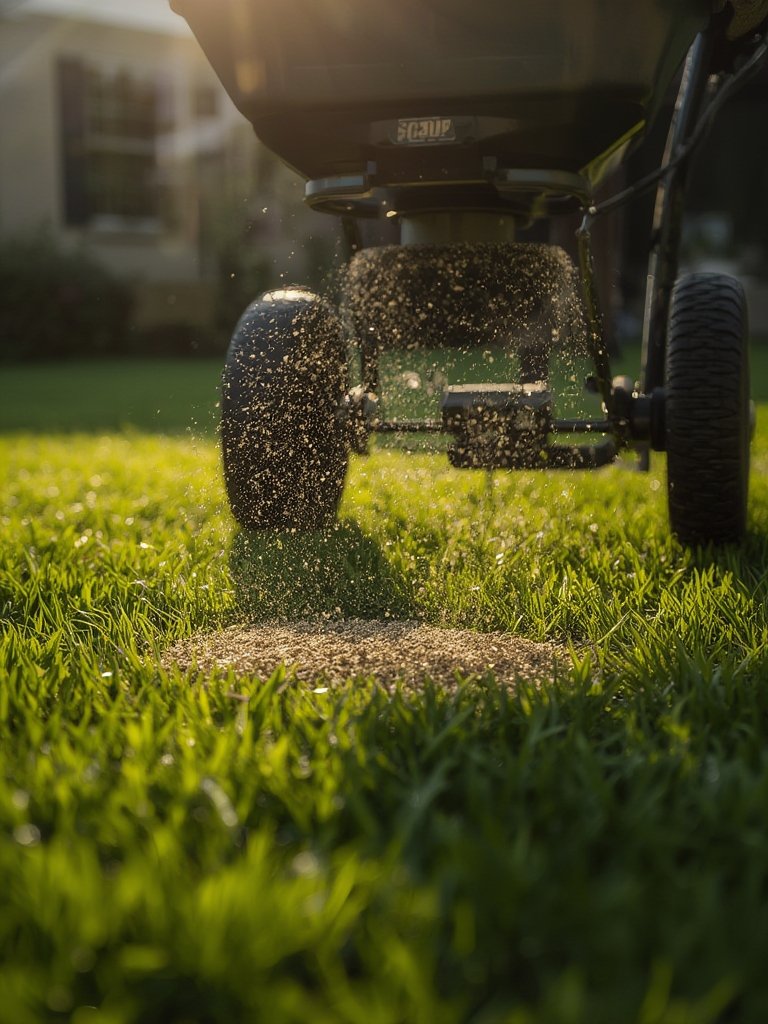
- Apply at the Right Time: Split your annual fertilizer needs into 2–4 applications per year, timing each based on your grass species (e.g., spring and fall for cool-season, late spring and summer for warm-season). Apply early in the morning or late afternoon, never just before a heavy rain. Use a spreader for even coverage—a lawn leveling rake can help prepare the surface for best results. For regional guidance, see step 5.
- Apply Properly: Water your lawn lightly before fertilizing and again afterwards to help nutrients penetrate the soil. Avoid overlapping passes, which can burn grass, and always sweep granules off sidewalks to prevent runoff.
- Adjust for Your Region: Bermuda, Fescue, Kentucky Bluegrass, and others have unique needs. For example, Kentucky Bluegrass often needs 4–6 lbs N per 1,000 sq ft annually, split throughout the year. If you’re unsure, consult advice specific to your planting zone or check with a local nursery.
- Monitor and Reapply (if necessary): Evaluate lawn growth after 4–6 weeks. If color fades or growth slows, a second application (using slow-release) may be needed. Avoid exceeding recommended total N for your grass type to protect from stress and runoff.
If you’re searching for ways to boost your home’s overall value beyond a healthy lawn, you might enjoy our guide on Home Improvement Trends. For those who prefer hands-on upgrades, check out expert advice on DIY home decor and home improvement tools to complement your lawn projects.
Prepping the soil with a lawn leveling rake can further enhance fertilizer absorption and reduce patchiness left by uneven surfaces.
Advanced Analysis & Common Pitfalls
Even seasoned homeowners run into issues with timing, product selection, and environmental safety. The most common frustrations? Uncertainty about when to fertilize, which product is safest for pets and kids, and confusion about local application guidelines. Let’s break down what can go wrong and how to avoid it:
| Fertilizer Type | Pros | Cons | Environmental Impact |
|---|---|---|---|
| Slow-Release (Synthetic or Natural) | Fewer applications, less leaching, steady growth, non-burning | Costs more up front, sometimes uneven release in extreme climates | Minimal runoff/pollution when applied correctly |
| Fast-Release (Synthetic) | Quick green-up, cheap, fast absorption | Easy to overapply, burns grass, fades fast, repeat applications | High risk of waterway/runoff pollution and ammonia loss (up to 30%) |
| Organic/Natural-Based | Improves soil health, long-term results, pet/kid safe | Slower visible results, sometimes pricier per nutrient unit | Safest—minimal leaching/runoff, enriches soil microbes |
| Phosphorus-Containing | Supports root dev. (new lawns) | Never use where runoff risk or state bans apply | Causes runoff, algae blooms, waterway contamination |
Applying too much fast-release fertilizer is the most common cause of lawn “burn”, runoff into streams, and wasting money. Another overlooked issue: not adapting fertilizer schedules to grass type or regional weather. For instance, high rainfall quickly drains nutrients from sandy soils, while clay soils can hold onto nutrients longer but risk compaction and root suffocation if over-fertilized.
Many homeowners also skip soil testing—resulting in mismatched N-P-K. Common symptoms of poor matching include stunted growth, yellowing leaves, and persistent weeds. If your lawn suddenly gets thin or patchy despite feeding, the answer is rarely “more fertilizer”—it’s usually the wrong type or timing. For bigger curb appeal projects, see our overview of home remodeling near me for yard-to-interior upgrade ideas.
Cost is another frequent frustration. Premium brands may cost more initially, but their slow-release formulas can require half as many applications. Urea, the cheapest common fertilizer by weight, also suffers from the greatest real-world losses (up to 20% loss to the air versus 5% for ammonium sulfate). Ultimately, cutting corners on soil prep or application tools can backfire, resulting in wasted product and lackluster results.
Conclusion
The science is clear: to fertilize the lawn well, prioritize slow-release or organic blends, test your soil, and split applications by season and species. This approach not only promotes a dense, green yard but also protects your family, pets, and the environment. Stick to phosphorus-free products whenever possible, and adapt guidelines for your local region and grass type. For step-by-step success, consult regional resources, and don’t skip simple tools like soil test kits or a lawn leveling rake for smooth spreading.
Ready to see greener, denser grass with less waste? Start with a soil test and upgrade your fertilization schedule today. Explore more upgrades with our Home Improvement Trends and share your progress for the chance to be featured in our next homeowner spotlight!
FAQ
When is the best time to fertilize the lawn?
Time feeds to your specific grass: cool-season types like fescue and Kentucky Bluegrass do best with spring and fall applications, while warm-season grasses like Bermuda respond well from late spring into summer. Avoid midday or before heavy rain to prevent runoff.
Should I use organic or synthetic fertilizer?
Both can green up a lawn, but organics improve soil, are safer for pets/kids, and lose less nutrient to runoff. Slow-release synthetics work well, too—just avoid excessive phosphorus and fast-release options for minimal environmental impact.
How often should I fertilize?
Split the yearly recommended dose for your grass into 2–4 feedings. More isn’t always better—over-fertilizing can burn your lawn or pollute local waterways. Use soil testing to dial in frequency.
Do I need to test my soil every year?
Testing every year or two gives the most precise guidance, especially if you’ve had problems with patchiness or color. It ensures you apply the right nutrients and not excess.
How can I make fertilizing safer for pets and kids?
Look for phosphorus-free and certified organic products. Water in fertilizer well after application, keep children and pets off the grass until it’s dry, and store fertilizers safely out of reach.